The home behind Corso di Pietra.
Nine years the kennel has existed, and one rule that has never changed: never more than one litter at a time, never a puppy we don't know by heart.
It started with Ferro, who was never meant to be a stud.
Antonio grew up around Italian molossers; Ferro was simply supposed to be his family dog. But by eighteen months, his temperament struck everyone: unbothered by noise, attentive without being nervous, able to lie down in the middle of a chaotic family dinner. It was our veterinarian who suggested, after a full round of screenings, that a dog like that deserved to pass on his calm.
That first litter taught us the essential thing: the difference between a puppy handled every day and a puppy left to its own devices never fully closes. It still shows years later, in how a dog reacts to the unexpected.
Nine years on, Corso di Pietra still runs on three dogs — Ferro, Freccia and Luna — raised in the house, in Laval, never in an outdoor kennel.
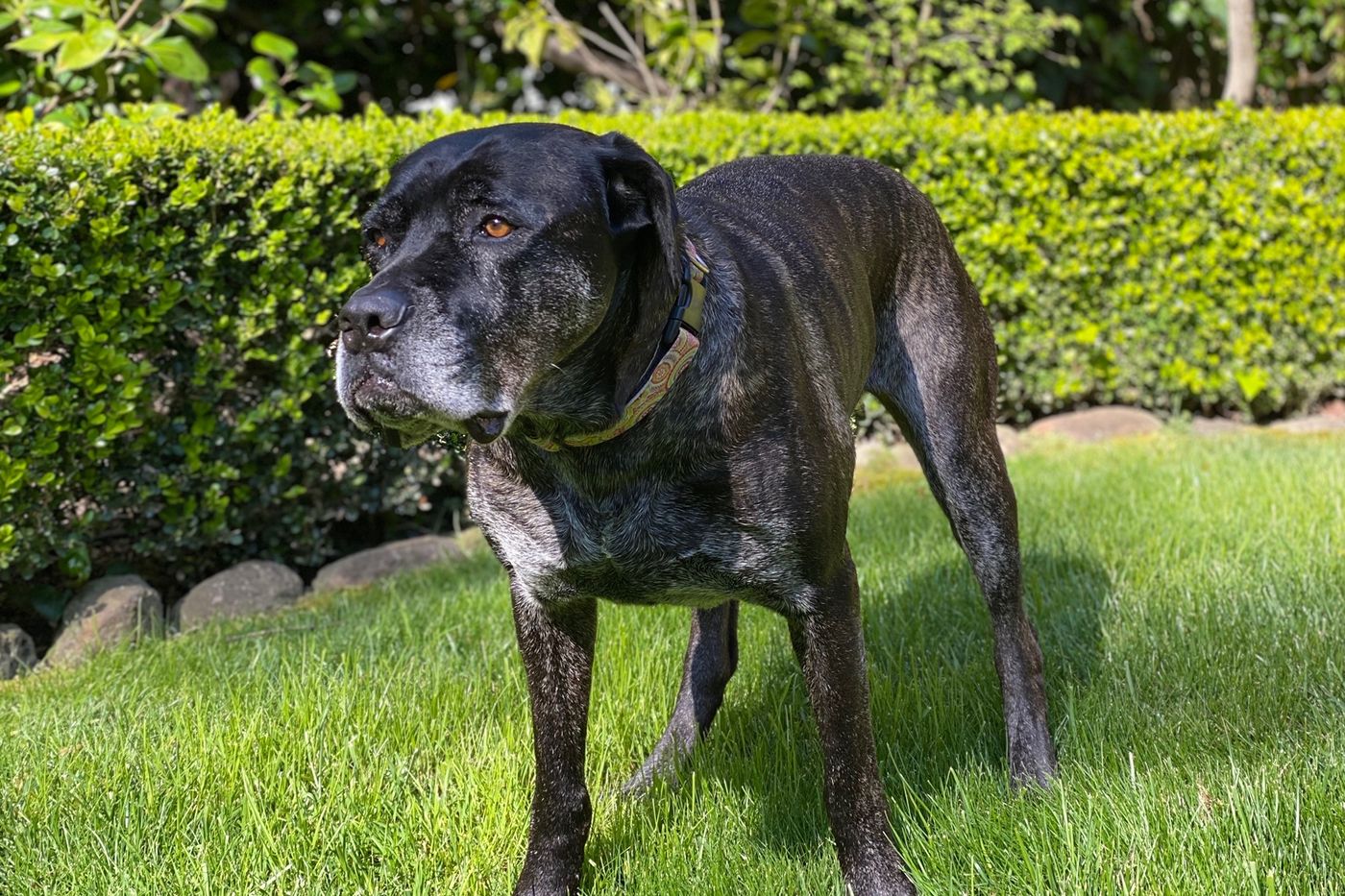
Three dogs, not a puppy factory.
Every mating is planned around them — never the other way around.
Ferro
Slate grey (grigio piombo), 46 kg of absolute calm. Hips, elbows, heart and eyes cleared without a flaw — the founder of our line, the dog who convinced us to start.
Freccia
Black, sharp and remarkably attentive to people. She's whelped her first two litters right here, and remains, at five, the most sociable of the three with visitors.
Luna
Light fawn (formentino) with a crisp mask. The gentlest of the trio with children — and the mother of our next litter, expected this fall.
We carefully rotate matings and never breed a dog on every heat. Three dogs managed with care beat a large number managed on a production line.
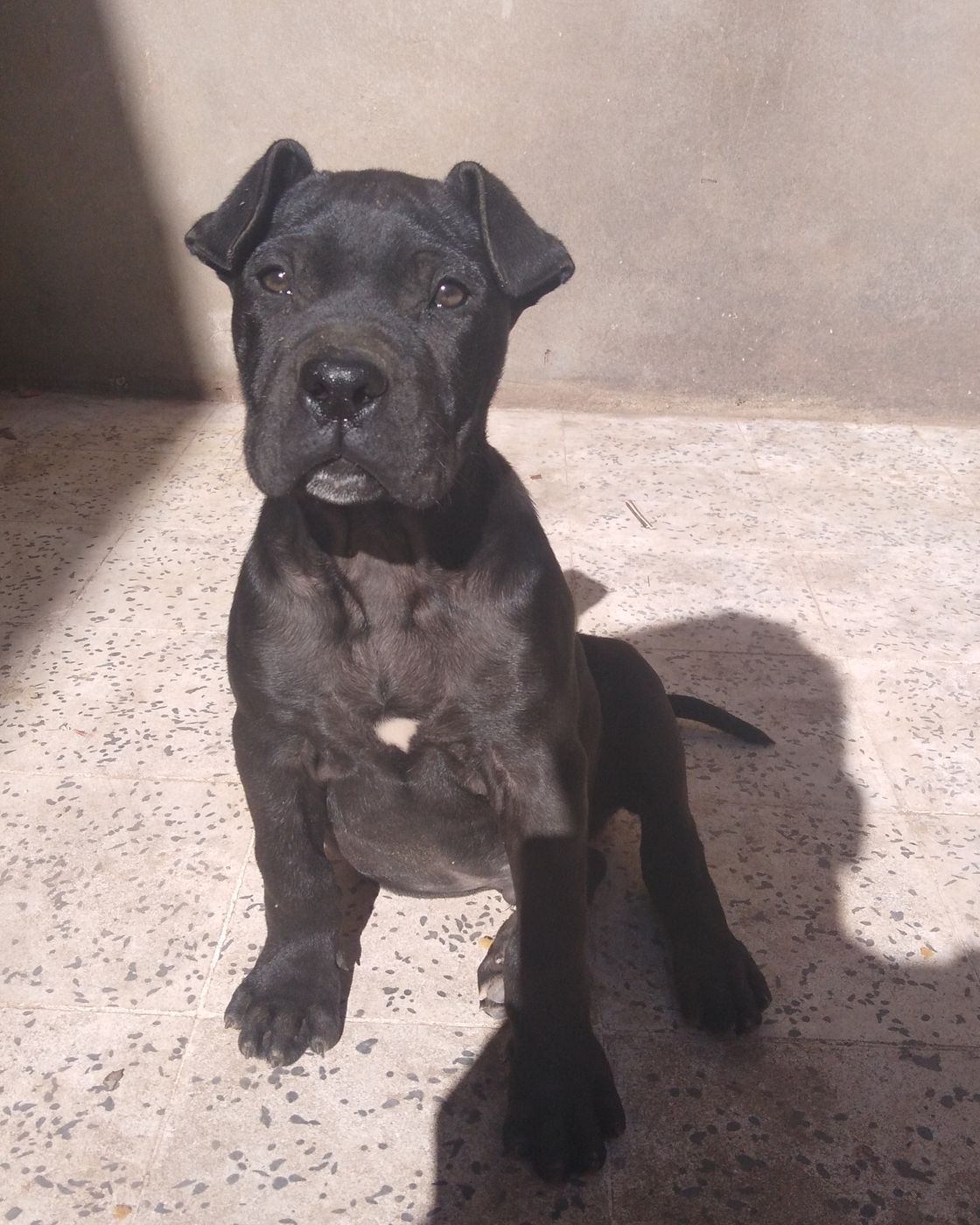
Powerful, yes. Unstable, never.
The Cane Corso comes from the Italian tradition of "cani da presa" — all-purpose farm dogs that guarded livestock and property in Puglia. That work required a dog able to judge a situation, not bark at everything that moves.
The breed standard is clear on this: a confident, biddable temperament, deeply attached to its family. A fearful or uncontrollably aggressive Corso is not a good example of the breed — it's a sign of poor breeding or poor socialization, never a goal.
From week 3
First everyday sounds, first surfaces, handling of paws and mouth.
Weeks 6 to 8
Visitors, children, calm other dogs — always in a controlled setting.
After adoption
We stay available to point you toward structured obedience training.
A Cane Corso is not a first dog. It needs firm structure and a real commitment to ongoing socialization into adulthood. But none of that has anything to do with intimidation: a Corso raised to be scary is a dog that's been poorly prepared to live in society.
What we screen for, and what we guarantee.
No mating happens until Ferro, Freccia and Luna have completed the screenings recommended for the breed. Certificates are handed to you in person — not summarized, not "available on request".
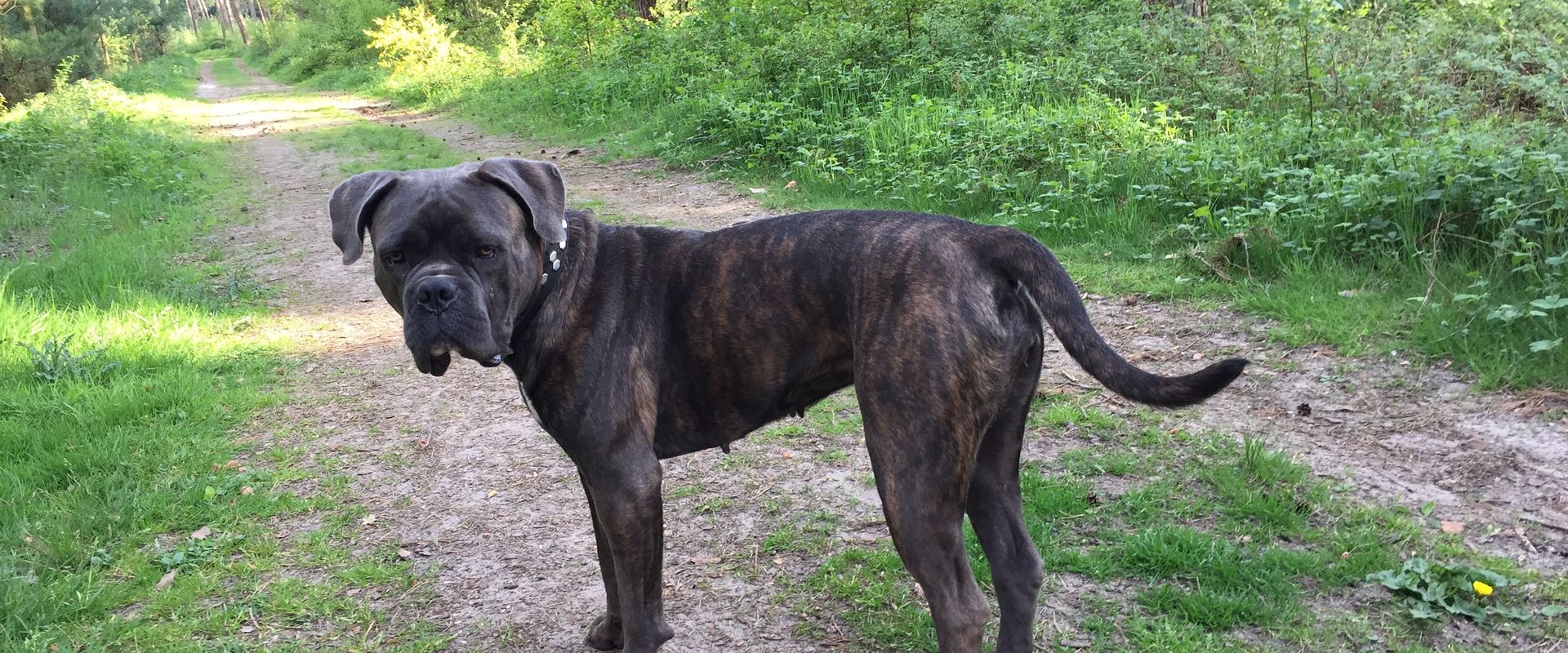
Hips and elbows
X-rays evaluated by a recognized body, on both parents, before any mating.
Heart
A cardiac assessment by a veterinarian before every mating — a precaution we never skip, even though incidence is lower than in giant breeds.
Eyes
Screening for entropion and ectropion (eyelid conditions), both well known in the breed, before any breeding.
Gastric dilatation-volvulus (bloat). Like several large, deep-chested breeds, the Cane Corso is at risk. Every adopting family leaves with the warning signs to watch for — a swollen abdomen, unproductive attempts to vomit, sudden restlessness — and prevention basics: several small meals rather than one large one, no vigorous exercise around mealtime.
You also leave with the contact information for a 24-hour emergency veterinary clinic, from day one.
A two-year guarantee against serious hereditary conditions, provided in writing. Replacement or refund, your choice.
Come meet Ferro, Freccia and Luna before you decide.
We welcome families by appointment, even without a firm plan. You'll see our dogs' temperament with your own eyes, and you can ask every question — including the uncomfortable ones.
One piece of advice, even if you don't adopt from us: be wary of a molosser breeder who won't show you the parents, or who leads with the puppy's "protection" potential before even discussing temperament. It's a reliable signal.